

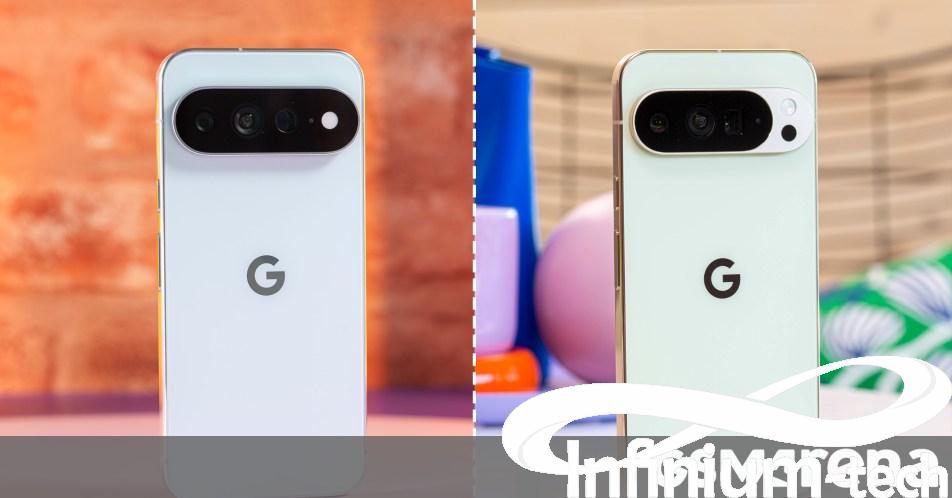
Google Pixel 11 Pro XL vs. Pixel 10 Pro XL | Infinium-tech
The shopping season is upon us, and if you’re considering a new Pixel, there’s an interesting choice to make. The latest Google Pixel 11 Pro XL can now be found for around €1,100, while last year’s Google Pixel 10 Pro XL is available for roughly €900. That’s a premium of about €200 for the newer model at some online retailers, though the difference can be considerably larger elsewhere.
So what exactly are you getting for the extra money, and is it worth paying? Let’s find out.
Table of Contents:
For starters, you can compare the complete specs sheets or directly continue with our editor’s assessment.
Size comparison
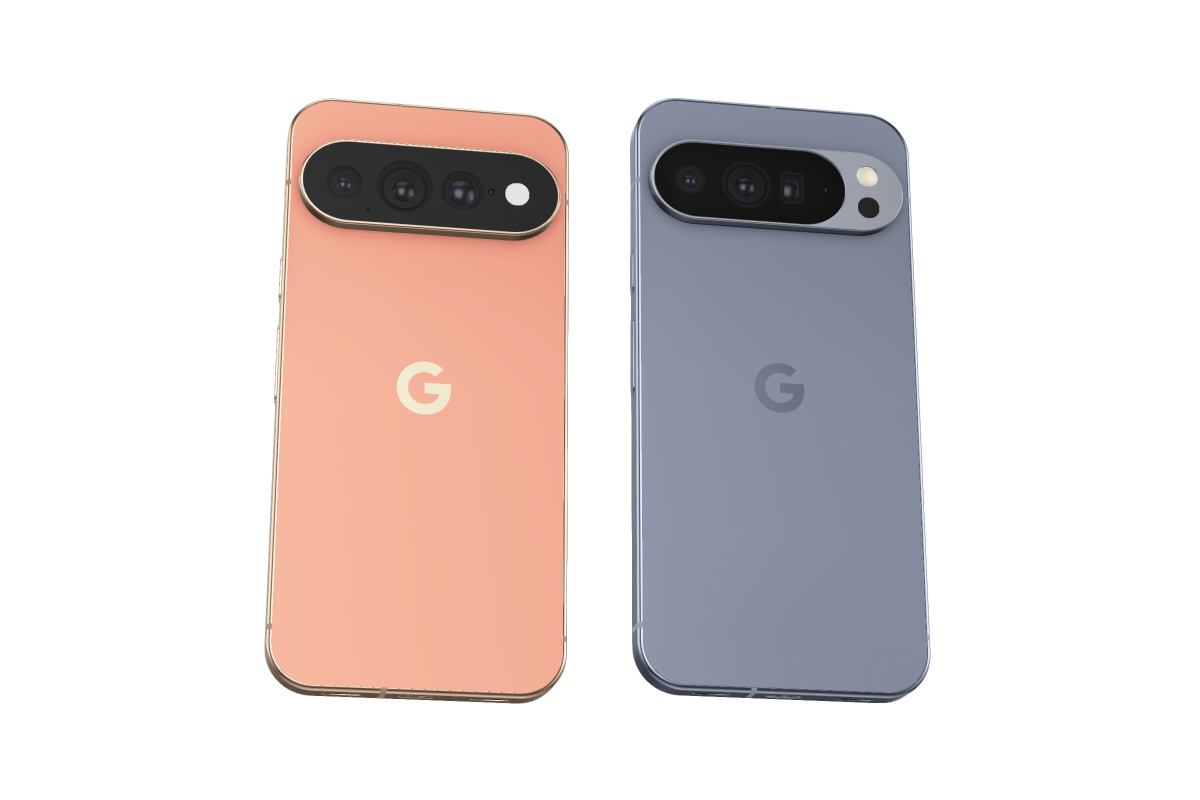
The two XL models are of the same size and build. They both feature Gorilla Glass Victus 2 panels, aluminum frames, and large camera bars on the back.
There is only one design difference, and that is the edge-to-edge glass on the camera housing – plus the different colorways, of course.
Winner: Tie.
Display comparison
The Pixel 11 Pro XL and Pixel 10 Pro XL rely on the same 6.8-inch LTPO OLED panel with a 1,344 x 2,992 pixel resolution, dynamic 120Hz refresh rate, and HDR10+ support. Google advertises a minor increase to the brightness capabilities of the Pixel 11 Pro XL – 2,400 nits max auto (up from 2,200 nits) and 3,600 nits of peak brightness (up from 3,300 nits).
Both phones delivered excellent and virtually identical brightness in our tests, despite Google’s higher advertised brightness figures for the newer model. In practice, there’s no meaningful display-quality advantage to choosing either one.
Winner: Tie.
Battery life
The Pixel 11 Pro XL is powered by a 5,115 mAh battery, while the Pixel 10 Pro XL has a slightly larger 5,200 mAh cell. Google promises much better efficiency with the new Tensor G6 chip inside the Pixel 11 Pro XL, and you can really see it in the battery life test.
The Pixel 11 Pro XL achieved an Active Use Score of 16:45h, while the 10 Pro XL got a 12:29h score. The new model logs significantly more hours across all tests.
Winner: Pixel 11 Pro XL.
Charging speed
The Pixel 11 Pro XL supports 45W wired charging over Power Delivery, just like the Pixel 10 Pro XL. This year, however, Google introduced an Extreme Charging mode, which users can enable when starting a charging session below 50% battery.
With Extreme Charging enabled, the Pixel 11 Pro XL reaches 78% in 30 minutes, compared with 64% on the Pixel 10 Pro XL. A full charge takes 60 minutes instead of 82 minutes, a substantial improvement despite their identical advertised charging ratings.
Winner: Pixel 11 Pro XL.
Speaker test
Both Pixel Pro XL models offer stereo speakers. And both setups scored a Very Good mark in our speaker loudness test. The audio quality is quite similar, too, with balanced sound across all frequencies.
Winner: Tie.
Performance
The Pixel 11 Pro XL runs on Google’s latest Tensor G6 chip, built on a 3nm process, much like the previous Tensor G5 inside the Pixel 10 Pro XL. Google promises better power efficiency and a 50% increase in AI processing power. Interestingly, the new chipset uses seven CPU cores instead of eight, although they’re based on newer architectures and run at higher clock speeds.
The GPUs of the two chipsets seem to be on the same level, but the one on the Tensor G6, for some reason, uses an older architecture, which lacks ray tracing support for more realistic shadow and light source rendering.
Memory-wise, the Pixel 11 Pro XL relies on either 12GB or 16GB of RAM, depending on the storage configuration. We can’t miss pointing out that, with the Pixel 10 Pro XL, all storage tiers have 16GB of RAM. In contrast, with the Pixel 11 Pro XL, the base 256GB storage comes with 12GB of RAM, and only the 512GB and 1TB variants get 16GB of RAM.
Benchmark performance
The Tensor G6 chip inside the Pixel 11 Pro XL offers a notable CPU performance boost – it outperforms last year’s Tensor G5 by more than 20% in multi-core scenarios and by almost 20% in single-core tests. There’s a sizeable increase in combined workloads like AnTuTu, too.
Unfortunately, that’s not the case with the GPU performance, where the new Tensor chip shows roughly the same performance as before. At least the initial compatibility issues with popular games which plagued the phone at launch seem to be fine now.
Finally, both Pixels offer comparable sustained performance with about 60% of CPU and 70% of GPU speed retention during stress tests.
The Pixel 11 Pro XL is the clear winner in CPU performance, but graphics performance and stability under prolonged load remain largely unchanged. For gaming in particular, the new model offers little reason to upgrade.
Winner: Pixel 11 Pro XL, but not by much.
Camera comparison
Both generations of Pixel Pro XL models feature what’s a conceptually identical triple rear camera setup that consists of a primary wide camera joined by an ultrawide and a telephoto module.
The most significant hardware change is the larger 1/1.95″ sensor in the new model’s 5x telephoto camera, replacing the roughly 1/2.5″ sensor used previously. However, the minimum focusing distance has actually increased to around 39cm, so the upgrade doesn’t improve the camera’s usefulness for close-ups.
The main camera is apparently unchanged, and it uses a 50MP 1/1.3″ sensor paired with a 24mm lens (or 25mm if you go off the officially listed angle of view).
The ultrawide has been carried over as well, and it too features a 50MP sensor that Google calls 48MP. It’s got a very wide lens with autofocus.
The selfie camera is the same as last time, offering an ultrawide lens with autofocus and a 42MP sensor.
There are two new software features which we can’t really see influencing purchasing decisions. One is Magic Capture – full auto shooting where the phone will capture video and also pick out high-res stills of the right moments all on its own. The other thing is the Camera Looks feature – the glorified filters thing that Apple calls Photographic styles.
Image quality
Daylight
The two Pixels shoot similar photos with their main cameras, both more or less falling within the principles that define the Pixel look, but the images are not without their differences. The new model has a finer detail structure, better definition, less obtrusive sharpening – it’s superior in a small but meaningful way. There are traces of a difference in the color rendition too, with the new model maybe leaning slightly warmer, though that’s neither here nor there.








Daylight comparison, main camera (1x): Pixel 11 Pro XL • Pixel 10 Pro XL
It’s somewhat disappointing that neither phone is much good at 2x, though they’re still quite different in what they give you at that zoom level. The 10 Pro XL will get you heavily sharpened greenery, while the 11 Pro XL chooses to just leave it soft and featureless.








Daylight comparison, main camera (2x): Pixel 11 Pro XL • Pixel 10 Pro XL
Both telephotos have a distinctly digital detail rendition at 5x, but the 11 Pro XL just might be doing it in a finer, more delicate way, and the new model’s images are sharper. They’re hardly the best of their kind, mind you, just better than last year’s. There’s a bit of that faint warmth in the 2026 shots too.








Daylight comparison, telephoto camera (5x): Pixel 11 Pro XL • Pixel 10 Pro XL
The 11 Pro XL is also superior at 10x, for the most part – if not necessarily in the amount of resolved detail in every scene, then at least in the way it’s presented.








Daylight comparison, telephoto camera (10x): Pixel 11 Pro XL • Pixel 10 Pro XL
The photos from the ultrawide cameras are possibly the least different between the two phones, though there are still occasional subtleties in the color palette.








Daylight comparison, ultrawide camera (0.5x): Pixel 11 Pro XL • Pixel 10 Pro XL
Low light
In the dark, the two main cameras are, unsurprisingly, broadly similar, but there is again a bit of a yellowish warm tinge on the Pixel 11 Pro XL in some scenes. Detail is very good on both, but still slightly better on the 11 Pro XL more often than not.








Low-light comparison, main camera (1x): Pixel 11 Pro XL • Pixel 10 Pro XL
At 2x, the 11 Pro XL just might be slightly less bad, but it’s really more of a toss-up than one of them having a real advantage.








Low-light comparison, main camera (2x): Pixel 11 Pro XL • Pixel 10 Pro XL
At 5x, the 11 Pro XL’s larger sensor isn’t giving it much of a tangible advantage. There are scenes or parts of scenes where you just might see a bit of an edge, but it would be an academic advantage at most, and not something that would make you choose one phone over the other.








Low-light comparison, telephoto camera (5x): Pixel 11 Pro XL • Pixel 10 Pro XL
At 10x, the 10 Pro tends to be noisier, while the 11 Pro XL is cleaner and perhaps a little sharper.








Low-light comparison, telephoto camera (10x): Pixel 11 Pro XL • Pixel 10 Pro XL
Looking at the ultrawide images, an unpleasant realization looms – the old model’s results are sharper, consistently and tangibly so.








Low-light comparison, ultrawide camera (0.5x): Pixel 11 Pro XL • Pixel 10 Pro XL
Selfies
The selfie camera hardware is by all accounts the same on both generations and we certainly appreciate the ultrawide AF-capable lenses. That said, the 11 Pro XL has a bit of an edge in terms of detail in good light, but it’s somehow worse in low-light (where the 10 Pro is hardly excellent itself).








Selfies comparison: Pixel 11 Pro XL • Pixel 10 Pro XL
Video quality
Both phones have roughly the same video recording capabilities, offering 4K60 capture on all cameras and 8K30 via cloud-based processing. The new Pixel can do HDR up to 4K60, while the 10 Pro maxes that out at 4K30, which could be a consideration.
Below we have a few framegrabs from the videos taken by the two phones at each focal length so it’s easier to compare to one another.
The daylight videos from the two phones are more similar than they are different, at all zoom levels. Global properties like color rendition, contrast and dynamic range are essentially identical between the two. The old model’s 1x clips leave an impression of being a little bit sharper, but it’s just the way the detail is rendered, we reckon – we wouldn’t say they actually resolve more of it. It’s a similar story on the ultrawides, with the 11 Pro XL having more lax sharpening. There’s even less of a difference in the telephoto footage, at least to our eyes, though the new model seems to have done a better job with the brick wall in the distance.





Daylight video screengrabs, Pixel 11 Pro XL: 0.5x • 1x • 2x • 5x • 10x





Daylight video screengrabs, Pixel 10 Pro XL: 0.5x • 1x • 2x • 5x • 10x
In the dark, main camera clips are as good as identical between the two phones, and so too are the results from the ultrawides. The 11 Pro XL might have a minuscule advantage on the telephoto end, but it’s so small as to be immaterial.





Low-light video screengrabs, Pixel 11 Pro XL: 0.5x • 1x • 2x • 5x • 10x





Low-light video screengrabs, Pixel 10 Pro XL: 0.5x • 1x • 2x • 5x • 10x
Winner: Pixel 11 Pro XL, but not by much.
Verdict
The Pixel 11 Pro XL is undoubtedly the better phone, though its advantages are concentrated in a few areas. Battery life has improved substantially, wired charging is significantly faster, and the Tensor G6 delivers a welcome CPU performance boost. The cameras have received some refinements too, but the improvements are much less pronounced.
That leaves the Pixel 10 Pro XL in a surprisingly strong position. It offers virtually the same display, design and everyday software experience, along with very competitive cameras. Its weaker endurance is the one compromise that may genuinely matter to some buyers.
Ultimately, the decision comes down to the price difference. At around €200, the newer Pixel makes a reasonable case for itself, particularly if battery life is a priority. But if the gap is closer to €300 or more, we’d lean toward the Pixel 10 Pro XL. It delivers much of the same flagship experience for considerably less money.

- Significantly longer battery life.
- Faster wired charging.
- Higher CPU performance.
- 4K60 HDR video recording.
- Improved daylight telephoto detail.
Get the Google Pixel 11 Pro XL for:

- Lower price.
- More RAM in the base version.
- Similar everyday experience.
- GPU with hardware ray-tracing support.
Get the Google Pixel 10 Pro XL for:





Leave a Reply