

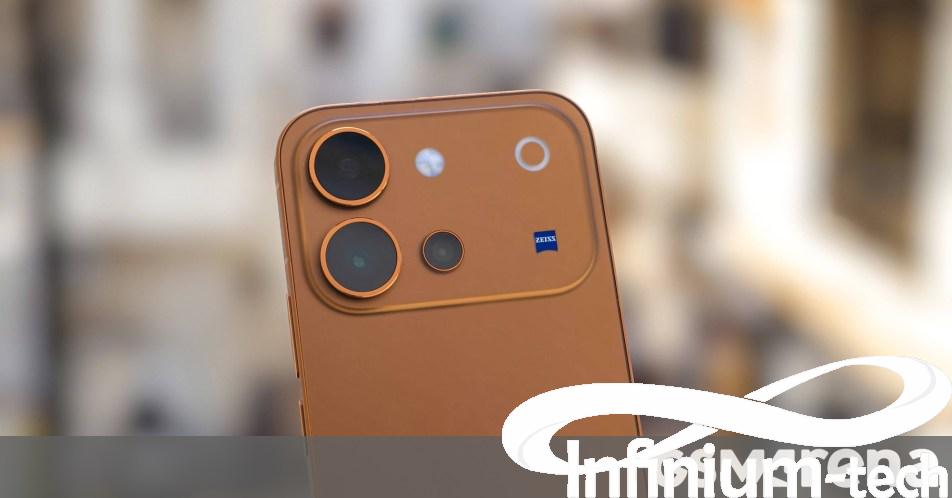
vivo V80 hands-on review – GSMArena.com news | Infinium-tech
vivo hosted a grand event today in Gurgaon, India, where it unveiled the V80 and S2 FE and introduced the X Fold6 to the Indian market. We used the vivo V80 for a few days, and here’s how it performed.
Design
The vivo V80 is built around a 6.59″ 1,260p 144Hz AMOLED display, surrounded by 1.25mm bezels.
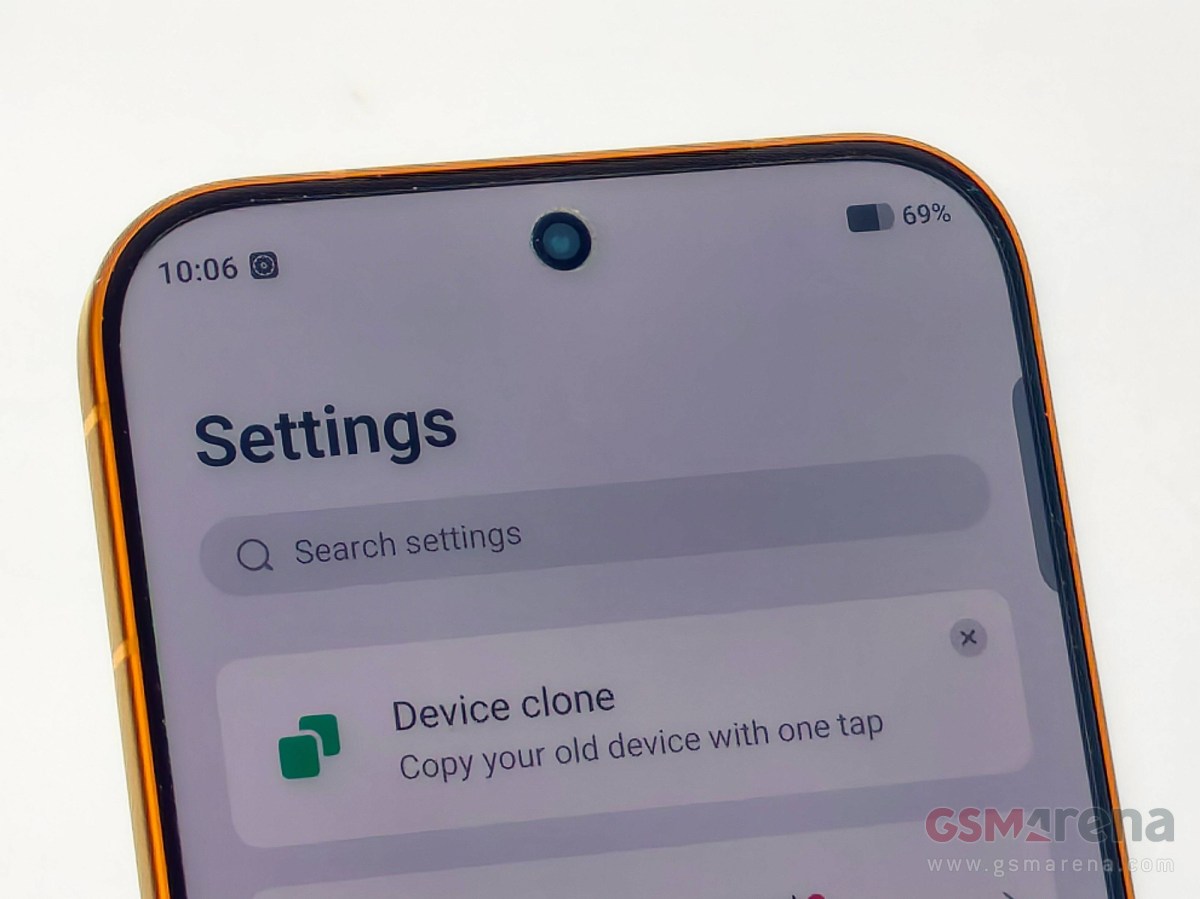
The display has a centered punch-hole for a ZEISS-tuned 50MP selfie camera.
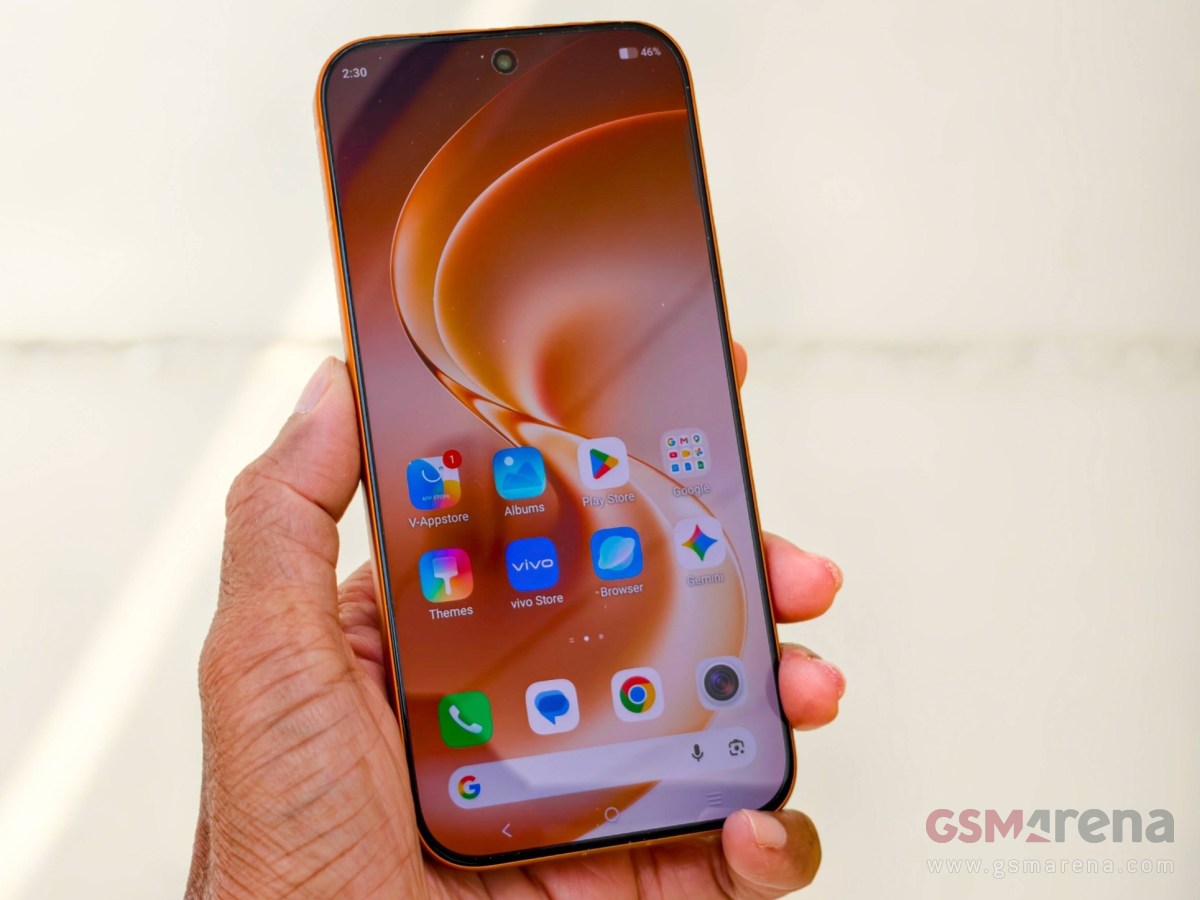
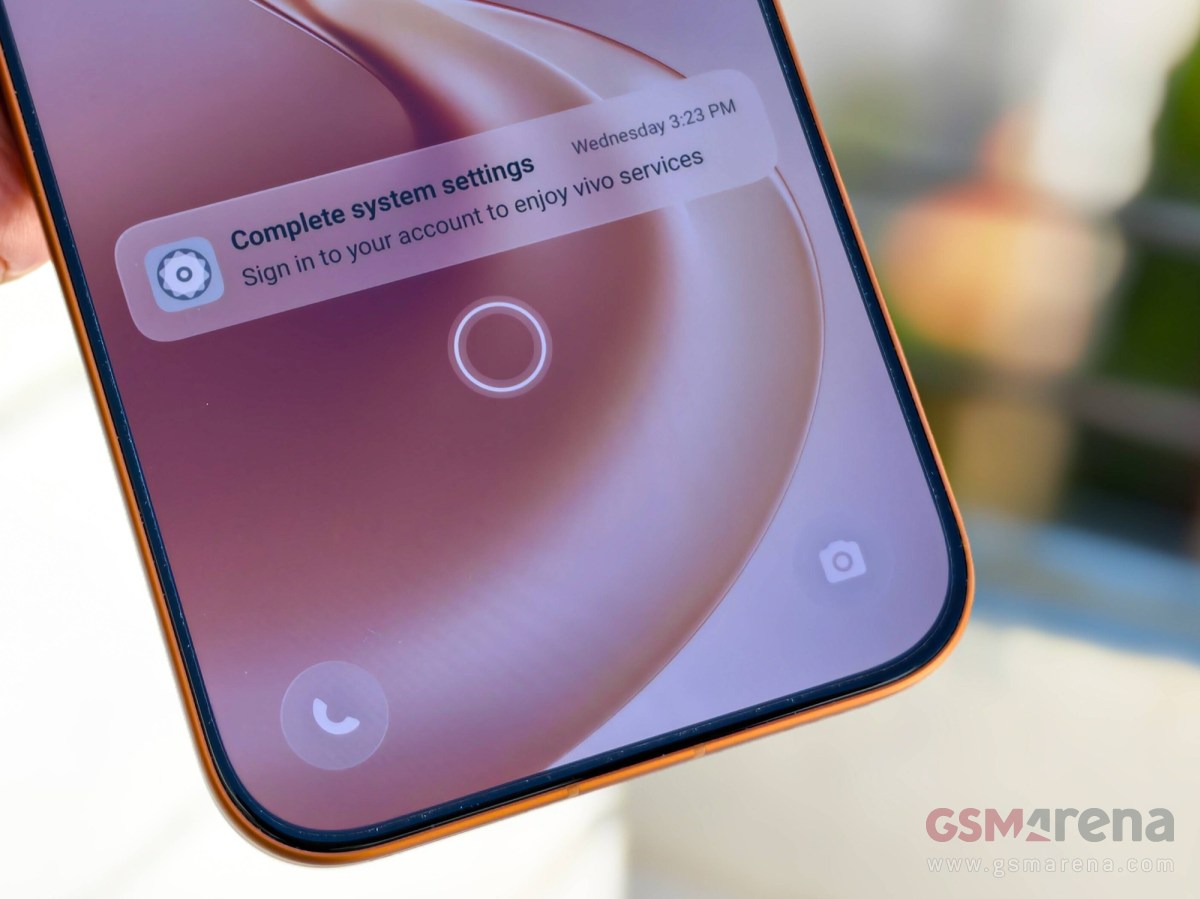
The V80’s display also has a 3D ultrasonic fingerprint scanner embedded, which was fast and accurate during our use. It supports swipe-based fingerprint enrollment, and we like how it’s placed far from the bottom bezel, facilitating a comfortable phone-unlocking experience. However, there were times when the phone experienced minor lag after unlocking it. It doesn’t hamper the user experience, but it’s still something worth mentioning.
Turn the V80 around, and you see what vivo calls a “Floating Camera Module.” vivo says it’s a “contemporary take on the classic square camera layout, softened with rounded corners for a lighter, more balanced expression.” The brand also said that the “transparent finish adds visual depth, making the design feel modern, distinctive, and effortlessly refined.”
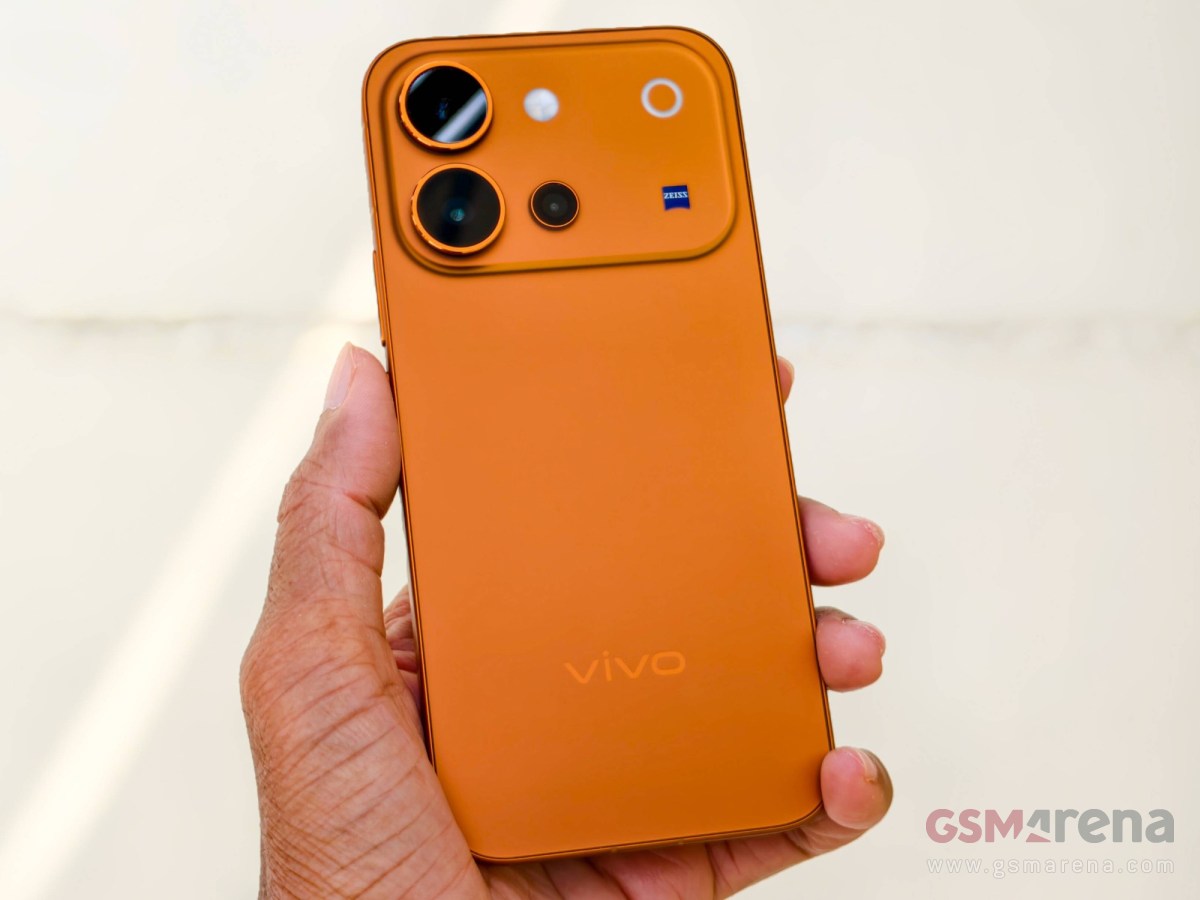
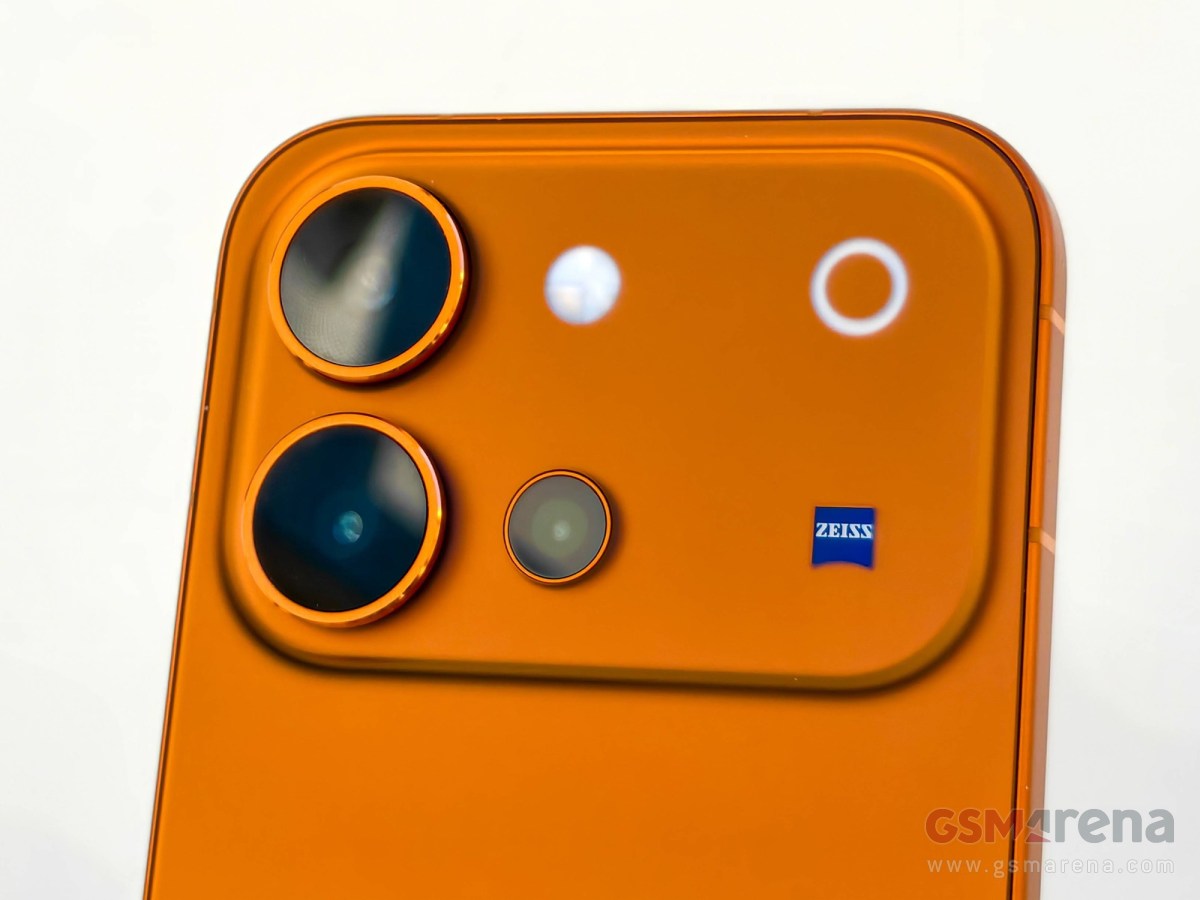
This camera module features an LED flash, a circular light called Aura Light, a ZEISS logo, and three ZEISS-tuned cameras – a 50MP primary, a 50MP telephoto, and an 8MP ultrawide.
The V80 wobbles when used on flat surfaces; however, the bundled transparent case does a great job of minimizing it.
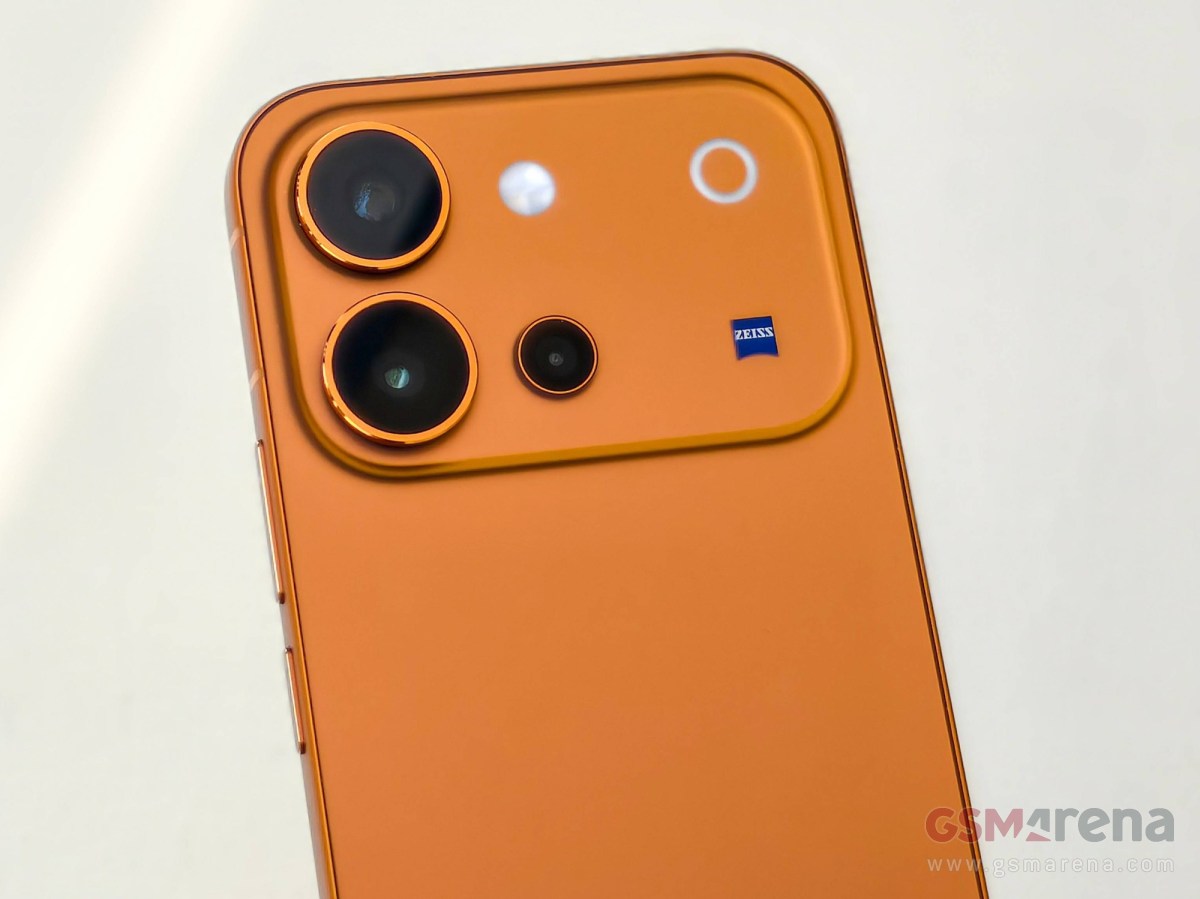
The V80’s rear design differs from its predecessor, but it may remind some of Apple’s iPhone Pro Max models, especially the Sunrise Anthem model, which is the subject of this hands-on and shows different shades depending on lighting and the angle at which it reflects light. The other two colors are Horizon Blue and Stellar Black.
The V80’s flat back panel and camera module are covered with a glass coating, and the finish feels identical to the vivo X300 FE. You can’t tell the two phones apart without looking at them.
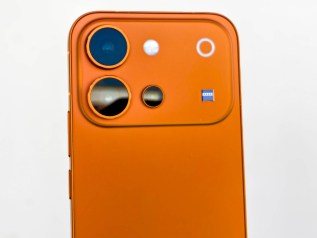
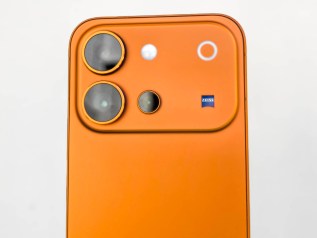
vivo V80’s Sunrise Anthem model shows different shades depending on lighting and the angle at which it reflects light
We like the vivo V80’s finish. It feels premium, provides a nice in-hand experience, and keeps the back panel smudge-free.
The V80’s “high-strength aluminum alloy” frame has a matte finish and stays smudge-free like the phone’s back panel. On the right-side frame are the volume rocker and power button – both with good feedback. At the bottom is the USB-C port, flanked by a SIM card slot, a microphone, and a speaker grille. On the top is the secondary mic with an IR blaster and another speaker outlet.
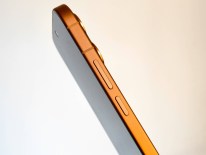
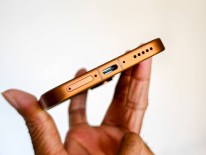
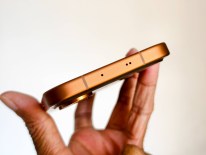
vivo V80’s ports and controls
The vivo V80 also has IP68 and IP69 ratings. We like its overall design. The smartphone is sturdy, feels premium in the hand, and has a nice finish. It’s also not difficult to use with one hand.
Display
The vivo V80 features a 6.59″ AMOLED display, surrounded by 1.25mm bezels. The display – protected by Schott Xensation Core glass – has a 2,750×1,260-pixel resolution, 459 ppi pixel density, and supports 1.07 billion colors.
It also supports HDR, HDR10+, and HLG codecs, and is Widevine L1-certified, enabling 1080p video streaming on compatible apps. Our unit didn’t play HDR videos on YouTube, though.
The V80’s display has a local peak brightness of 5,000 nits, while HBM brightness is 1,800 nits. It can also dim down to 1 nit for a comfortable low-light reading experience. The display was sufficiently bright, and we had no issues watching content even under strong sunlight.
Furthermore, the V80’s display supports up to 144Hz refresh rate. It can switch between 60Hz, 90Hz, 120Hz, and 144Hz, which is restricted to gaming. The display settings menu offers three refresh rate options – Smart adaptation, Standard (60Hz), and High (144Hz).
When you select High, you get the “Custom app refresh rate” option in that menu, which lets you select the apps you want to run at 120Hz. Until OriginOS 6, the list also included games installed on the phone, but in OriginOS 7, you only see apps. Games are now listed in Ultra Game Mode. We find this slightly inconvenient, as having all the apps and games listed in one place is both time-saving and convenient.
With Standard mode selected, everything expectedly refreshes at 60Hz. But with High mode, the refresh rate bumped from 60Hz to 120Hz when interacting with the display and remained at 60Hz the rest of the time. This behavior was consistent across most system menus and apps, including Facebook, Instagram, YouTube, Google Play Store, Google Chrome, and Google Photos.
Smart adaptation mode works like High mode, but it limits the maximum refresh rate to 90Hz when using Facebook, Instagram, YouTube, and Google Chrome.
What about games? Well, Sky Force: Reloaded, Dead Trigger 2, and Call of Duty: Mobile – the games we usually play on most of our review devices – ran at 120Hz in High mode. In Smart adaptation mode, only Call of Duty: Mobile ran at 120Hz.
In our experience, Sky Force: Reloaded, Dead Trigger 2, and Call of Duty: Mobile all ran at 60 FPS in Smart adaptation mode. In High mode, Call of Duty: Mobile and Dead Trigger 2 ran at 60 FPS, while Sky Force: Reloaded reached a maximum of 101 FPS.
Hence, the High refresh rate mode is your best option if you want the smoothest experience possible on the vivo V80.
Software and Performance
The vivo V80 is powered by the Snapdragon 7 Gen 4 SoC, which is the same chip that powered the vivo V70 launched earlier this year and the V60 that came last August. We would’ve liked a newer, more powerful chip inside the V80, but that could have raised the phone’s price, which may be why vivo stuck with the same chip it used in a two-generation-old phone.
That said, the vivo V80 comes with 8GB of LPDDR4X RAM and up to 512GB of UFS 3.1 storage. Our unit has 8GB of RAM and 256GB of onboard storage.
On the software side, you get Android 17-based OriginOS 7, making it the first V-series smartphone to run OriginOS 7 out of the box. It comes with the promise of four Android OS upgrades and six years of security updates. vivo told us that security updates will be released every month for the first two years, quarterly for the 3rd and 4th year, and every six months for the 5th and 6th year.
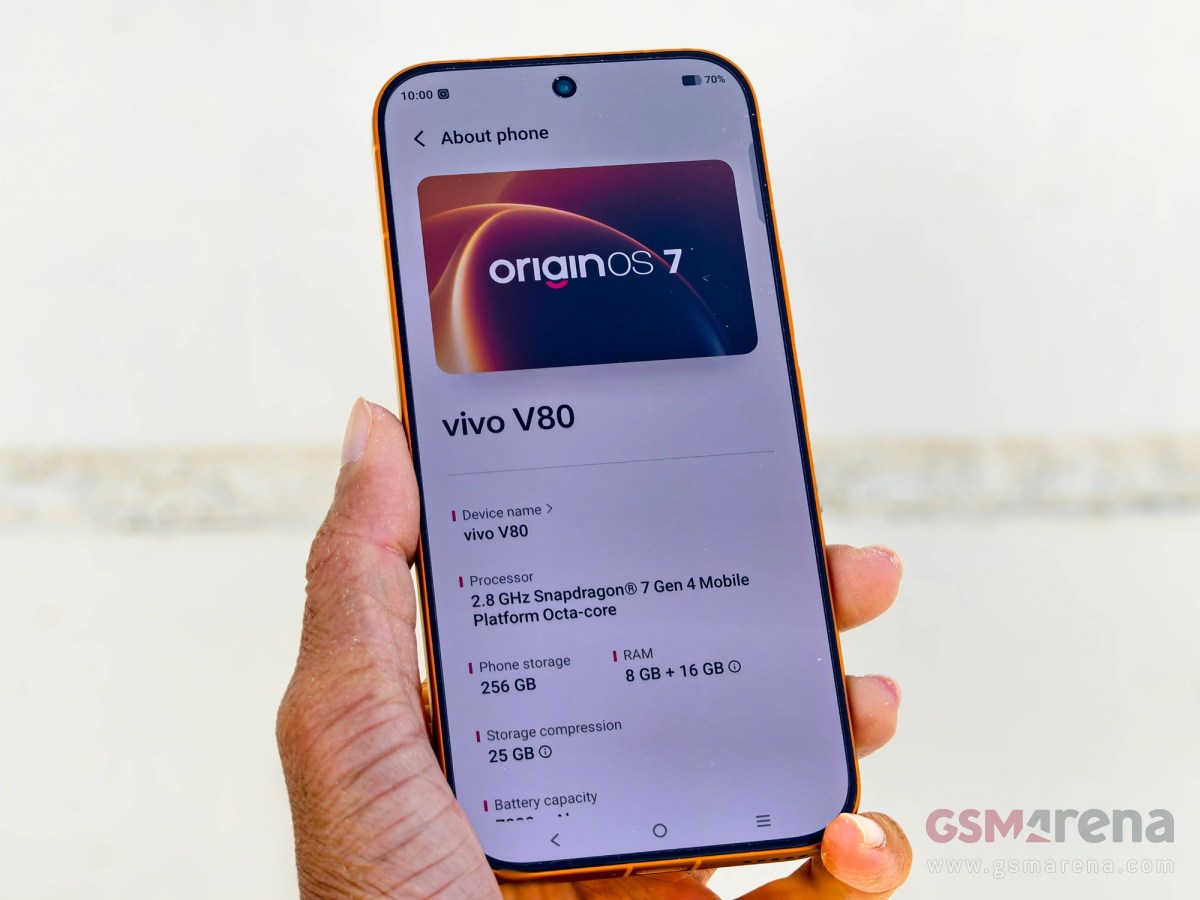
It’s also worth noting that our review unit, an Indian model, came pre-loaded with just one third-party app – Booking.com. It didn’t have any other third-party apps or games pre-installed. That’s impressive for a Chinese brand! We want other brands to follow suit.
OriginOS 7 doesn’t come with a major design revamp, but it does bring new features, including Wiggle Theme, StickIt, and Snap Notes. We’ll take a detailed look at OriginOS 7 in our full review.
In terms of performance, the vivo V80 worked reliably in everyday use. It wasn’t as snappy as the vivo X300 Pro or the X300 Ultra, of course, and it did stutter a few times, but overall we have no complaints. The V80’s gaming performance was also good enough, and it remained reasonably cool after playing games such as Call of Duty: Mobile for over an hour.
You can check the charts below to see how the vivo V80 performed in synthetic benchmarks.
And now we have a couple of screenshots showing the vivo V80’s sustained performance in a GPU stress test.
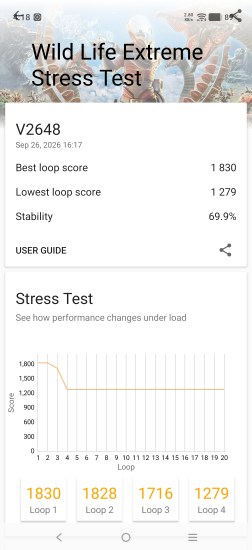
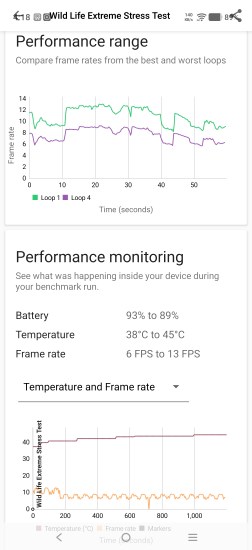
GPU test
We also ran the CPU Throttling Test app on the V80 to see how it would perform in a 1-hour CPU stress test, but the test never completed, as the phone got very hot after a 15-minute run, prompting its system to close the app and wait for the phone to cool down to use it again. The phone prevented all apps from opening until it cooled down.
Camera
The vivo V80 features four cameras – one on the front and three on the rear. All are co-developed with ZEISS and have ZEISS optics.
The front camera is called “ZEISS Group Selfie Camera” by vivo. It uses a 50MP sensor and has autofocus, an f/2.0 aperture, 92° FOV, and a magnification range of 0.8x – 2x. It can also record videos in up to 4K resolution at 60 FPS. vivo hasn’t revealed the sensor used for the selfie camera.
The triple camera setup on the rear comprises a 50MP “ZEISS OIS Main Camera,” a 50MP “ZEISS Night Telephoto Camera,” and an 8MP “ZEISS Ultra Wide-Angle Camera.”
The primary camera uses the Sony LYTIA 700V sensor, has an f/1.88 aperture, OIS, an 84° FOV, and is capable of recording videos in 4K resolution at 60 FPS. The telephoto camera – having OIS, an f/2.65 aperture, 3x optical zoom, and 100x digital zoom – uses the Sony IMX882 sensor. The ultrawide camera has an f/2.2 aperture and 115° FOV, but vivo hasn’t revealed the sensor it uses.
The 8MP resolution of the ultrawide camera is the same as the previous two generations of phones, and it’s about time we got upgrades in that department.
That said, some noteworthy camera features the vivo V80 comes with include 4K Cinematic Video, AI Creative Camera, and AI Diwali Portrait 2.0 (India-exclusive). It also comes with ZEISS Multifocal Portrait, supporting five focal lengths – 23mm, 35mm, 50mm, 85mm, and 100mm.
We are leaving the detailed analysis of the vivo V80’s camera system for our full review, but we did click some pictures with the smartphone, which you can check below.
Daylight Photos
Let’s see the daylight pictures first, captured with the vivo V80’s 8MP ultrawide camera, followed by the 50MP primary camera.
Ultrawide camera, 8MP, 0.6x magnification.





Ultrawide camera, 8MP, 0.6x magnification
Primary camera, 12.6MP, 1x magnification.





Primary camera, 12.6MP, 1x magnification
Primary camera, 50MP (High resolution), 1x magnification.





Primary camera, 50MP (High resolution), 1x magnification
Low-light Photos
We also took some photos in low light with the vivo V80’s cameras.
Ultrawide camera, 8MP, 0.6x magnification.



Ultrawide camera, 8MP, 0.6x magnification
Primary camera, 12.6MP, 1x magnification.







Primary camera, 12.6MP, 1x magnification
Primary camera, 50MP (High resolution), 1x magnification.







Primary camera, 50MP (High resolution), 1x magnification
Battery
Keeping the vivo V80 up and running is a 7,200 mAh Si/C battery, which is an upgrade over the 6,500 mAh battery the V70 packed. However, while the battery capacity has increased, the wired charging speed remains the same at 90W. What’s also retained is bypass charging.
We couldn’t run our standard battery tests on the vivo V80, as we can only do those at our HQ, and the phone was tested in India. However, the smartphone should easily get you through a day on a single charge.
The vivo V80’s battery is advertised to charge to 50% in 30 minutes in Fast Charging Mode with the bundled 100W FlashCharger. That wasn’t the case in our charging tests, though.
In our testing, the vivo V80 charged from 1% to 21% in 15 minutes, 45% in 30 minutes, 50% in 32 minutes, 94% in 1 hour, and 100% in 1 hour and 2 minutes. It took another 5 minutes for the battery full status to appear on the screen. Note that your mileage will likely vary depending on usage and the ambient temperature when charging the vivo V80.
Conclusion
The vivo V80 has a bright display, reliable performance, new software, a big battery, and a sturdy build. We liked its design, too, even though it could remind some users of another popular smartphone that doesn’t run Android.
The primary camera doesn’t take bad photos, but we’d like vivo to fine-tune it for more consistent colors across Photo and High-Res modes, especially in low-light conditions. The High-Res mode could also be optimized to reduce processing time between consecutive clicks.
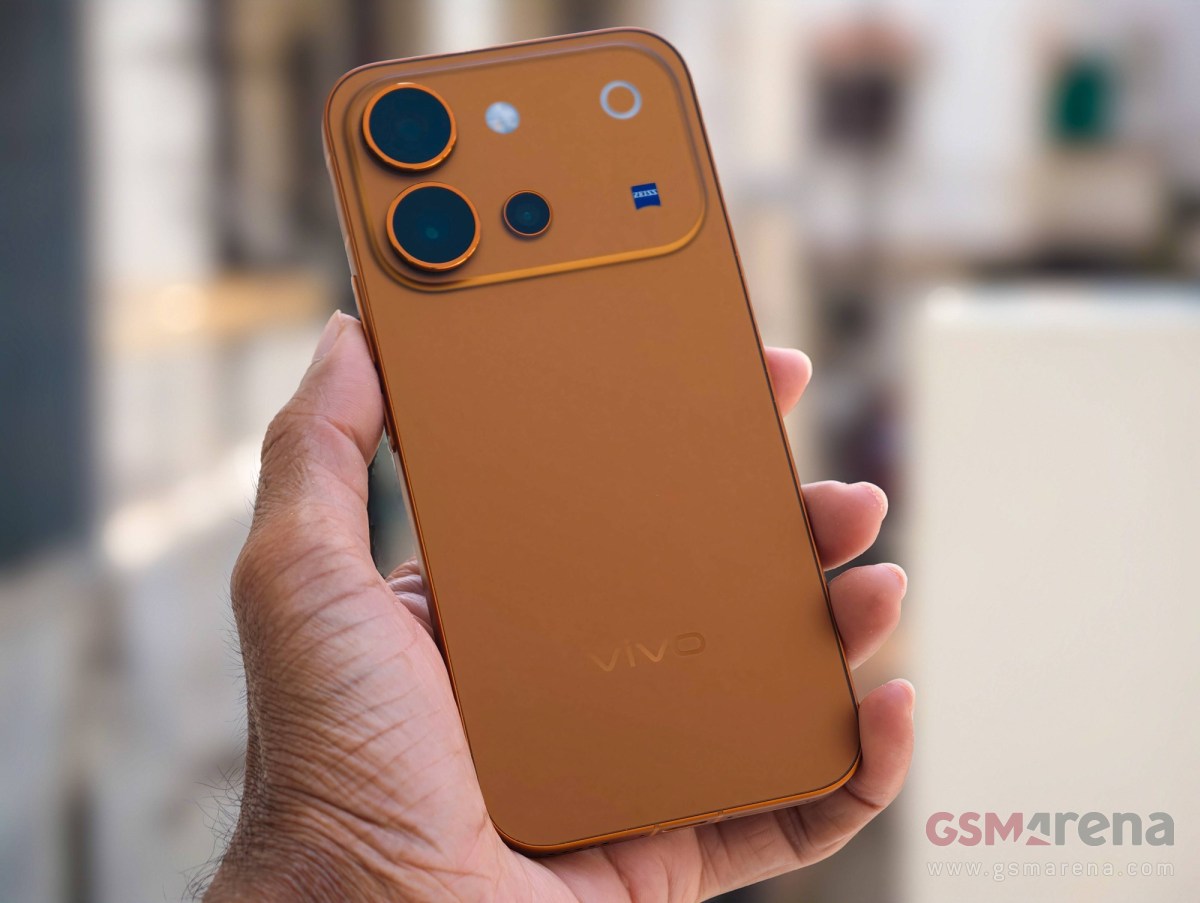
The vivo V80 comes in Sunrise Anthem, Horizon Blue, and Stellar Black colors. All models have three memory options – 8GB/128GB, 8GB/256GB, and 8GB/512GB.








Leave a Reply